Category "Blogs"

17Jul2026

Life in the Kashmir Valley moves to its own unique rhythm. While our rich culture and geographical landscape are unmatched, the region presents unique environmental challenges for growing children. The harsh, freezing winters often mean long, continuous months spent indoors with restricted outdoor physical play.

With limited physical outlets during these periods, many parents in Srinagar, Anantnag, and Baramulla face a common challenge: children are turning to smartphones for entertainment.

This extended indoor screen-time creates cognitive sluggishness. Parents frequently notice that when schools reopen or examinations approach, children struggle to concentrate on text-heavy books, experience brain fatigue quickly, and struggle to retain complex concepts.

To combat this indoor-induced attention drop, parents can introduce specific, targeted brain exercises that improve focus, keeping young minds active, agile, and sharp throughout the year.

  1. The Photographic Memory Flashcard Test

When a child spends hours looking at moving video screens, their brain becomes a passive consumer of information rather than an active observer. To reverse this, we must activate their photographic memory.

  • The Exercise: Take a highly detailed picture, a historical map, or a complex array of objects. Let your child look at it for exactly 10 seconds. Cover the image and ask them specific, minute questions (e.g., “What color was the coat of the person on the left?” or “How many windows were on the house?”). This builds visual attention and trains the brain to take rapid mental snapshots of physical data.
  1. Mentally “Seeing” the Math: Spatial Visualization

When children learn math abstractly through rote memorization, it causes cognitive fatigue. Giving them a physical, visual mental anchor completely changes how their brain processes data.

  • The Exercise: Have your child mentally map out paths or structures. In advanced settings, this is done by training the child to look at a calculation tool, memorize the bead patterns, and then mentally slide those beads with their eyes closed to solve intricate mathematical equations. This acts as a high-intensity workout for the right hemisphere of the brain, responsible for creativity, visualization, and deep concentration.
  1. Deep Listening & Reverse Sequencing

To build cognitive resilience, children must learn to hold pieces of information in their short-term working memory while processing new data.

  • The Exercise: Say a sequence of 5 words or numbers to your child (e.g., Apple, Chinar, River, Snow, Kangri). Ask them to repeat the sequence completely in reverse (Kangri, Snow, River, Chinar, Apple). This simple exercise demands absolute focus; a single second of distraction will break the sequence.

Keeping Young Minds Bright Across Kashmir with Aloha

Brain development shouldn’t stop when outdoor activities freeze. Aloha J&K’s scientifically designed skill development programs act as a year-round, indoor mental gym for children aged 4 to 13.

By using the Abacus as a core structural tool, Aloha transforms abstract numbers into a tangible, playful learning system. Our students develop an incredible capacity for speed, precision, and analytical thinking. The exercises practiced in an Aloha classroom don’t just eliminate math phobia—they systematically expand a child’s attention span, listening skills, and self-confidence, ensuring they excel in every school subject.

11Jul2026

Many parents believe that a child’s ability to concentrate is an innate trait—either they are born with a laser-focused mind, or they are naturally easily distracted. Cognitive science, however, tells a completely different story. Focus is a developed skill, highly dependent on daily environmental cues, physical routines, and neural conditioning.

In an era dominated by rapid-fire notifications, algorithmic video feeds, and high-pressure academic schedules, a child’s attention span is constantly under siege. Expecting a child to sit down and focus for hours on end without training their focus “muscle” during the rest of the day is like expecting someone to run a marathon without training.

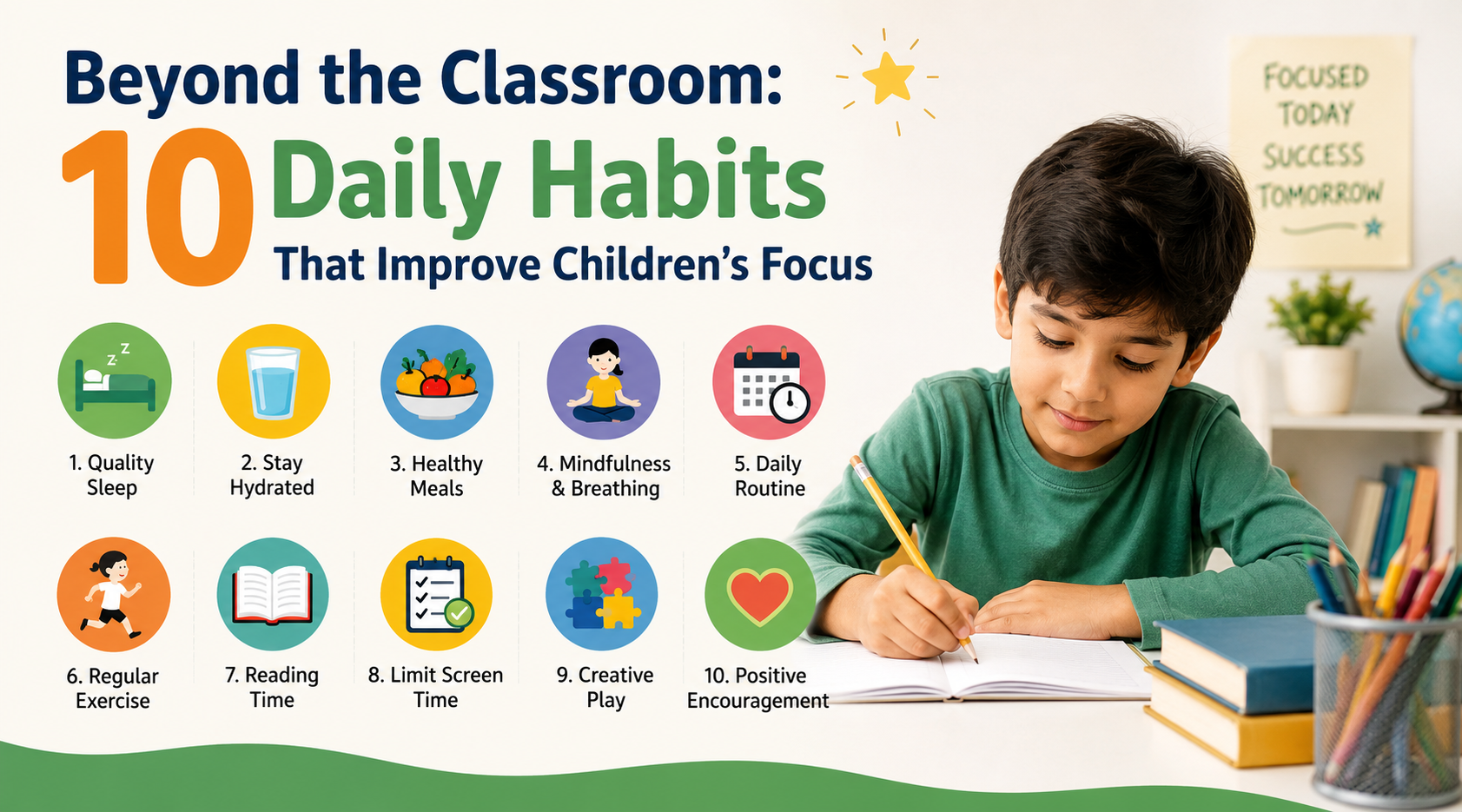
To build an unshakeable attention span, focus must be woven into the fabric of everyday life. Here are 10 powerful, data-backed daily habits that improve children’s focus and unlock their true cognitive potential.

  1. The “Single-Tasking” Rule for Homework

In a digital world, multitasking has become a modern epidemic. Children frequently try to solve math problems while glancing at a tablet, listening to background music, or chatting with a family member. Multitasking doesn’t save time; instead, it causes “cognitive switching penalties,” draining the brain’s energy and fracturing the attention span.

  • The Habit: Establish a strict single-tasking rule during study hours. Clear the workspace of all non-essential items. If they are working on a reading assignment, that is the only thing allowed on their desk. This trains the neural pathways to sustain deep focus on a single stimulus at a time.
  1. Implementing the “20-20-20” Digital Eye Strain Rule

Extended screen time physically fatigues the ciliary muscles of the eye, which sends distress signals to the brain, causing cognitive fatigue and a drop in concentration.

  • The Habit: For every 20 minutes your child spends looking at a digital screen (for school or leisure), have them look away at an object at least 20 feet away for at least 20 seconds. This simple physical reset reduces optical fatigue and preserves mental stamina for reading and writing tasks.
  1. A Consistent “Dopamine Fast” Before Bedtime

The high-contrast blue light emitted by smartphones and televisions suppresses the natural production of melatonin, the hormone responsible for deep sleep. More importantly, the rapid reward loops of video games and short-form videos overstimulate dopamine receptors, making standard schoolbooks feel painfully boring the next morning.

  • The Habit: Implement a firm digital blackout at least 60 minutes before bedtime. Replace screens with physical books, audiobooks, or a calming conversation. A well-rested, chemically balanced brain is dramatically better at focusing the following day.
  1. The Morning “High-Protein, Steady-Glucose” Breakfast

What your child eats for breakfast directly dictates their cognitive curve for the rest of the afternoon. High-sugar cereals, white bread, and refined pastries cause a rapid spike in blood glucose, followed by a sharp mid-day crash that leaves children irritable, hyperactive, or daydreaming at their desks.

  • The Habit: Build breakfast around lean, high-quality proteins and complex carbohydrates (such as eggs, oats, and nuts). Protein stabilizes blood sugar levels, providing a steady, reliable stream of amino acids to help the brain synthesize focus-regulating neurotransmitters.
  1. Mindful “Transitions” Between Activities

Moving immediately from a high-energy environment (like playing a sport or returning home from a noisy school bus ride) to a high-concentration task (like studying) creates mental friction. The child’s nervous system is still revved up, leading to restlessness.

  • The Habit: Create a 5-to-10-minute “buffer zone” between major daily events. Have your child wash their face, practice a brief breathing exercise, or simply sit quietly for a few minutes before opening their books. This signals the nervous system to shift from a high-energy state into an analytical, focused state.
  1. The “Brain Dump” Journaling Routine

When a child sits down to study, their working memory is often cluttered with unresolved thoughts: a disagreement with a friend, anxiety about an upcoming test, or excitement about a weekend plan. This internal monologue continuously saps their executive function.

  • The Habit: Give your child a blank notebook and 3 minutes to scribble down every single thought, worry, or task currently floating in their head before they start studying. Physically clearing these thoughts onto paper frees up valuable cognitive real estate for learning.
  1. Structured “Brain Breaks” Using the Pomodoro Method

Forcing a young child to sit still for two hours straight is counterproductive. Attention spans have natural limits, and forcing a exhausted brain to study results in passive reading and high error rates.

  • The Habit: Use a modified Pomodoro technique tailored to your child’s age. For younger children (ages 5-8), aim for 15-20 minutes of intense focus followed by a 3-minute break. For older children, try 25 minutes of work followed by a 5-minute break. During the break, they must stand up, stretch, or move physically—no looking at screens allowed.
  1. The Daily 10-Minute Spatial Visualization Drill

A powerful way to expand a child’s attention span is to challenge their mental tracking abilities through visualization, forcing the left and right hemispheres to coordinate.

  • The Habit: Spend 10 minutes a day playing memory games, solving physical puzzles, or practicing abstract visual math. Exercises where a child has to close their eyes and manipulate objects mentally build a profound capacity for deep, independent concentration.
  1. A Dedicated “Distraction-Free” Zone

Our physical environment shapes our psychological habits. If a child studies in bed, their brain confuses relaxation with work. If they study at the dining table amidst family chatter, their auditory cortex is constantly overworked trying to filter out the noise.

  • The Habit: Set up a dedicated study corner that is used exclusively for focused work. Keep it well-lit, quiet, and consistently organized. Over time, simply sitting down in this specific chair will act as a psychological trigger, automatically priming the brain to enter focus mode.
  1. The Evening “Win” Reflection

Children who struggle with focus often face persistent negative feedback throughout the day (“Stop moving,” “Pay attention,” “Why haven’t you finished this?”). This builds academic anxiety, making them want to avoid cognitive tasks altogether.

  • The Habit: Every night at dinner or right before bed, ask your child to share one small thing they successfully focused on or achieved that day. Celebrating these micro-wins rewires their relationship with effort, reinforcing the idea that deep concentration is a rewarding and achievable skill.

The Ultimate Habit: The Aloha Mental Gym

While forming these habits at home is incredibly beneficial, true cognitive transformation happens when daily habits are paired with a structured, scientific training regimen.

At Aloha J&K, we have designed our global Abacus and Mental Arithmetic program to serve as the ultimate daily workout for a child’s attention span. By practicing our visualization and rapid-calculation techniques for just a few minutes every day, Aloha students build incredible mental stamina.

The daily habit of manipulating abstract numbers via a mental abacus expands working memory, sharpens auditory listening skills, and teaches children how to block out background distractions with absolute ease

3Jul2026

Many parents in Srinagar, Jammu, Delhi, Punjab, and across North India observe their children facing difficulties with attention, restlessness, incomplete homework, or wandering minds during studies. This is a widespread concern backed by research. Studies in India report ADHD prevalence ranging from 1.3% to 28.9%, with pooled estimates around 6-7% and school-based rates often higher (e.g., 6.34% in rural Jammu & Kashmir and up to 11% in some regions).

Understanding the root causes helps parents address them effectively. While some factors are biological, many are influenced by modern lifestyle, environment, and academic demands—particularly relevant to Kashmir’s climate, North India’s competitive schooling, and family routines.

Common Reasons Children Struggle with Concentration

  1. Neurodevelopmental Factors and ADHD : Attention Deficit Hyperactivity Disorder (ADHD) involves differences in brain development affecting attention, impulse control, and activity levels. It has a strong genetic component (around 75% heritability) and can be influenced by prenatal factors. In India, it is more commonly identified in boys, though girls are often underdiagnosed. Not all attention issues stem from ADHD, but awareness is growing.
  2. Excessive Screen Time : Prolonged use of smartphones, tablets, and TV fragments attention spans. Constant notifications and fast-paced content overstimulate the brain, making sustained focus on slower tasks like reading or studying harder. In Kashmir’s long winters, indoor screen habits often increase, correlating with poorer academic performance and behavioral challenges.
  3. Inadequate or Poor-Quality Sleep : Children aged 5-12 need 9-11 hours of quality sleep nightly. Irregular bedtimes, late-night screens, or disturbances reduce cognitive restoration. Sleep deprivation directly impairs attention networks in the brain. Academic pressure and coaching classes in North India often push bedtimes later, worsening this cycle.
  4. Diet and Blood Sugar Fluctuations : Diets high in refined carbs, sugary snacks, or heavy meals (common in traditional Kashmiri or North Indian households during festivals/winters) cause energy spikes followed by crashes. This leads to brain fog and reduced focus. Nutrient gaps in omega-3s, iron, or proteins can also affect cognitive function.
  5. Lack of Physical Activity and Outdoor Time : Sedentary routines limit blood flow and neurochemicals like dopamine and BDNF that support focus. Harsh Kashmir winters and urban pollution reduce outdoor play, while packed school + tuition schedules in North India leave little room for movement.High Academic and
  6. Environmental Stress : Intense competition for board exams, coaching culture, and parental expectations create chronic stress, which narrows attention. In Kashmir, additional factors like seasonal changes, family dynamics, or regional uncertainties can contribute. Air pollution (rising in the Valley due to vehicular emissions, biomass burning, and winter inversion) is linked to cognitive effects and reduced concentration.
  7. Inconsistent Daily Routines : Unpredictable schedules make it harder for young brains to build attention stamina. Frequent disruptions, overstimulation, or lack of structured breaks compound the issue.
  8. Other Contributing Factors  : Dehydration, sensory overload, underlying health issues, or excessive extracurricular load can also play roles. Environmental pollutants and changing lifestyles further amplify challenges.

These factors often interact—for example, screen time reducing sleep and activity simultaneously.

Moving Forward with Practical Support

Recognizing these causes is the first step. Evidence-based strategies like consistent routines, balanced local nutrition (e.g., incorporating walnuts, greens, and steady-energy foods), limited screens, movement, mindfulness, and quality sleep can make a significant difference for most children.

Families in Srinagar and surrounding areas seeking structured support for brain development, working memory, and holistic growth can explore specialized programs that blend cognitive training with personality development and regionally adapted frameworks.

By understanding why concentration struggles occur and addressing lifestyle factors, parents can help children build stronger attention skills, better academic outcomes, and greater confidence amid today’s demands.

20Jun2026

Every time a child learns a new word, successfully ties their shoelaces, solves a puzzle, or manages their frustration when losing a game, their brain is undergoing a complex architectural transformation. For decades, parents measured growth primarily by physical milestones—height, weight, and motor skills. However, in the modern educational landscape, the focus has shifted deeply inward.

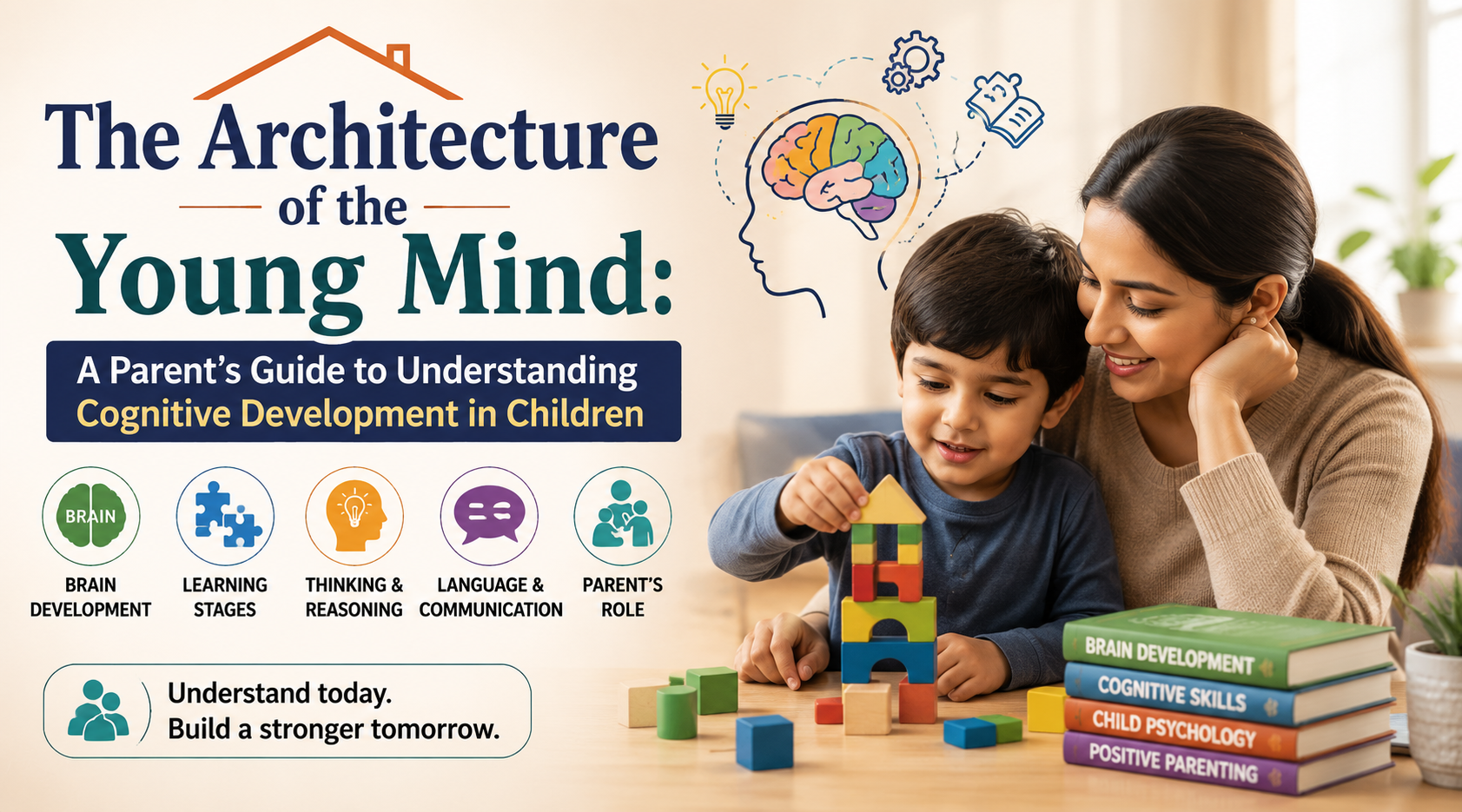
Understanding cognitive development in children is no longer just a subject for academic psychologists; it is the ultimate blueprint for parents who want to help their children build the mental resilience, focus, and intelligence required to thrive in a rapidly evolving world.

Cognitive development refers to how a child perceives, thinks, and gains an understanding of their world through the interaction of genetic and learned factors. It encompasses areas such as information processing, intelligence, reasoning, memory, language development, and crucial “executive functions” like decision-making and self-control.

To help your child unlock their true intellectual potential, let’s unpack how the brain develops, the specific milestones to look out for, and how you can actively stimulate whole-brain growth.

The Cognitive Blueprint: How a Child’s Brain Grows

The human brain grows at an astonishing rate early in life. By the age of five, a child’s brain has already reached roughly 90% of its adult size. During these foundational years, the brain forms millions of synapses—the connections that allow neurons to communicate with one another.

As children grow, their brains undergo a natural process called synaptic pruning. Connections that are used frequently become stronger and more permanent, while connections that are neglected fade away. This means that the environments, activities, and mental exercises a child is exposed to between the ages of 4 and 13 directly sculpt the literal physical structure of their adult brain.

Left Brain vs. Right Brain: The Need for Equilibrium

True cognitive mastery requires structural harmony between the two hemispheres of the brain:

  • The Left Hemisphere: This side is primarily analytical, logical, sequential, and text-oriented. It handles step-by-step processing, such as reading a sentence, memorizing facts, and executing traditional linear mathematics.
  • The Right Hemisphere: This side is intuitive, creative, spatial, and visual. It processes information globally, recognizes faces, visualizes abstract concepts, and governs emotional understanding.

The traditional schooling system often heavily favors left-brain education—focusing on rote memorization, repetitive writing, and theoretical text reading. However, when a child’s education lacks right-brain stimulation, they struggle with higher-order cognitive skills like creative problem-solving, rapid spatial estimation, and innovative thinking.

Maximizing cognitive development requires Whole Brain Development—engaging both hemispheres simultaneously.

Critical Milestones in Cognitive Development (Ages 4 to 13)

Cognitive growth doesn’t happen in a uniform, straight line. Instead, it occurs in distinct, predictable stages. Understanding these stages allows parents to provide the right mental stimulation at the exact moment their child’s brain is ready to receive it.

Phase 1: The Intuitive & Preoperational Stage (Ages 4 to 7)

At this stage, children learn primarily through imitation, play, and symbols. They are highly imaginative, but their thinking is still largely egocentric (they struggle to see things from another person’s point of view) and concrete.

  • Key Milestones: Developing symbolic thought (using an object to represent something else), rapid language acquisition, and basic classification skills (sorting blocks by color or size).
  • The Challenge: Attention spans are naturally brief, and logical reasoning is fluid rather than absolute. Children at this stage easily experience cognitive fatigue if forced into rigid, hours-long study routines.

Phase 2: The Concrete Operational Stage (Ages 7 to 11)

This is a massive turning point in a child’s cognitive development. Thinking becomes far more logical, organized, and structured. Children begin to understand the concept of conservation—the realization that an amount stays the same even if its shape or container changes.

  • Key Milestones: The ability to perform mental operations (such as reverse arithmetic), understanding cause-and-effect relationships, and significantly improved operational memory.
  • The Challenge: While they can think incredibly logically, their reasoning is still heavily tied to physical, concrete realities. Abstract concepts—like advanced algebraic variables or theoretical formulas—can cause intense frustration and anxiety if not introduced using visual or tactile methods.

Phase 3: The Early Formal Operational Stage (Ages 11 to 13)

As children enter early adolescence, their brains begin to master abstract reasoning. They no longer need a physical object in front of them to solve a problem; they can formulate hypotheses, think systematically about the future, and engage in metacognition (thinking about their own thinking).

  • Key Milestones: Abstract problem-solving, systematic planning, and the development of conceptual strategies.
  • The Challenge: This stage coincides with a massive neurological rewiring during puberty. Executive functions can become temporarily erratic, making structured, calming mental routines absolutely essential to keep them grounded.

The Pillars of Executive Function: The Brain’s Control Center

Beyond academic scores, understanding cognitive development means tracking a child’s Executive Functions. Think of executive function as the air traffic control system of the brain—it manages the flow of information, filters distractions, and dictates focus.


  1. Working Memory: The capacity to hold and manipulate pieces of information in the mind over short periods. A strong working memory allows a child to remember multi-step instructions without getting lost along the way.
  2. Cognitive Flexibility (Mental Shift): The ability to switch gears, adapt to unexpected changes, and look at a problem from multiple different angles when the first approach fails.
  3. Inhibitory Control (Impulse Management): The vital capability to resist strong inclinations, filter out distracting background noises, and choose focus over immediate gratification.

How to Actively Optimize Your Child’s Cognitive Growth

Cognitive capacity is not a fixed, unchangeable number. It is an evolving asset. By introducing targeted exercises, parents can systematically expand their child’s working memory, accelerate processing speeds, and build lifelong academic confidence.

  1. Replace Abstract Math with Visual Systems

Mathematics is often the biggest trigger for childhood academic stress because it forces young minds to manipulate abstract symbols before their concrete brain operational phases are fully prepared.

  • The Strategy: Use visual tools like the Abacus to represent numbers as physical, moving beads. This bridges the gap between concrete and abstract thinking, transforming complex math into a tactile, visual reality that eliminates anxiety and builds geometric intuition.
  1. Practice High-Speed Auditory Tracking

To strengthen inhibitory control and working memory, train your child to process audio information at varying speeds without visual aids.

  • The Strategy: Read out strings of data or operational instructions rapidly. Force the brain to listen intently, hold those numbers in the working memory, compute the answer internally, and deliver it aloud. This cuts out ambient environmental distractions and sharpens auditory focus.
  1. Encourage Spatial Mental Mapping

Before a child solves a problem on paper, challenge them to build a complete mental map of the solution in their mind’s eye.

  • The Strategy: Have your child close their eyes and manipulate shapes, count objects, or visualize mathematical movements entirely in imagination. This high-level sensory training actively exercises the right hemisphere, paving the way for advanced photographic memory retention.

The Aloha Methodology: Engineering Balanced Minds

At Aloha J&K, our global curriculum is built explicitly around the science of understanding cognitive development in children. We don’t view mental arithmetic as a tool just to pass school tests; we view it as a comprehensive developmental catalyst for the entire brain.

Through our structured, interactive Abacus and Mental Arithmetic courses, we guide children systematically through their vital cognitive phases.

By teaching students to visualize the abacus beads internally, we stimulate the creative right brain while simultaneously engaging the analytical left brain to process the logical numerical data. This dual-hemisphere engagement forces the brain to build richer, denser neural networks.

The result? Aloha students don’t just calculate faster than a computer—they develop significantly higher concentration levels, superior photographic memory, sharp auditory processing, and an unshakeable sense of self-confidence that benefits them across all academic disciplines.

Invest in your child’s neural architecture during their most critical formative years.

20May2026

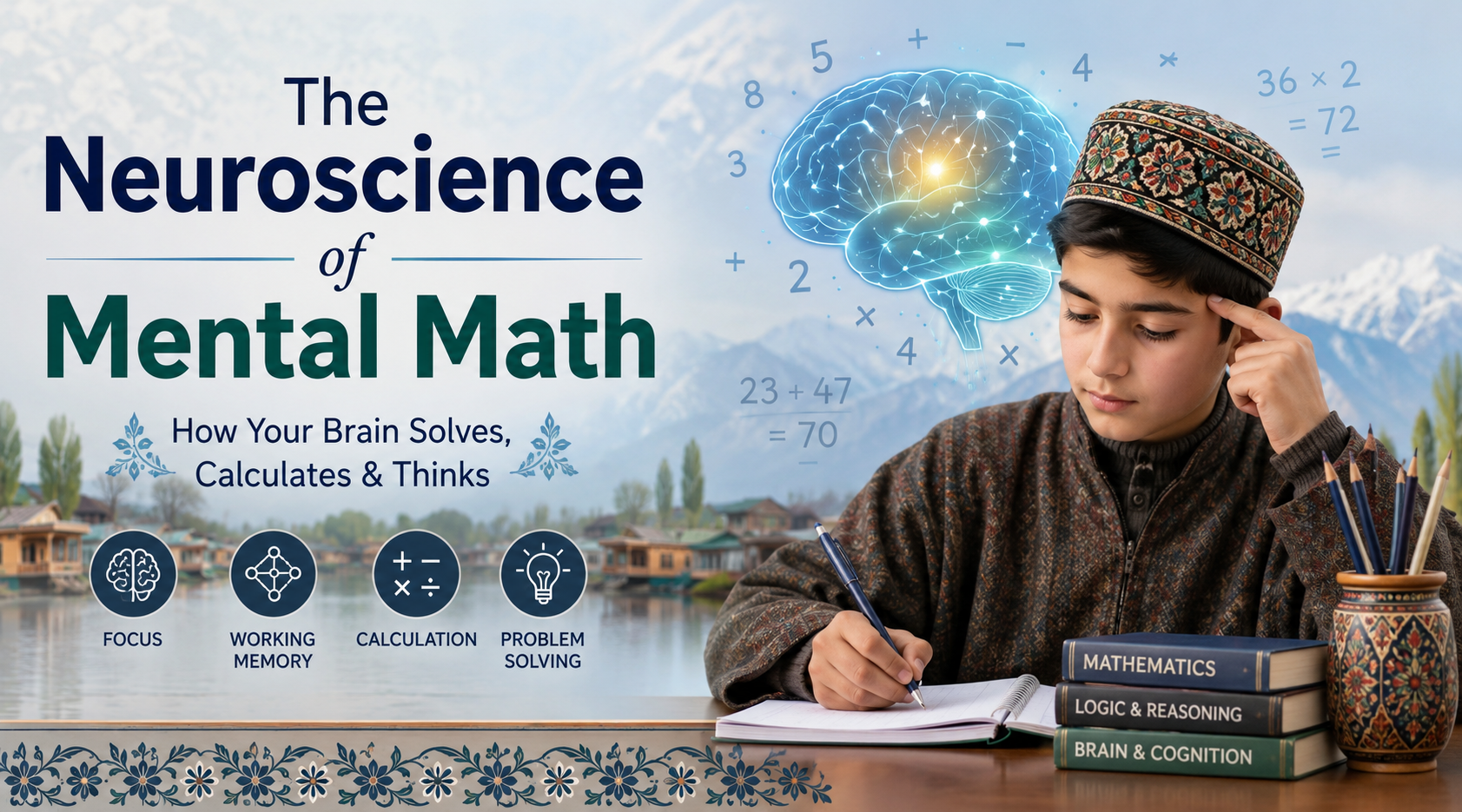
Neuroplasticity in Action: How Mental Arithmetic Supports Brain Growth

For generations, mastering mental math was viewed simply as a practical life skill—a convenient way to calculate a bill or pass a school exam without relying on a physical calculator. However, with major advancements in modern neuroimaging, cognitive scientists have uncovered a far more profound reality.

Performing complex calculations entirely in one’s head isn’t just a demonstration of static intelligence; it is a powerful catalyst for physical brain alteration.

The developing brain of a child possesses an extraordinary superpower known as neuroplasticity. This is the biological capacity of neural networks to grow, reorganize, and rewire their physical connections in response to rigorous learning and environmental stimuli.

When a child engages in structured, speed-driven mental math, they are giving their brain the ultimate high-intensity workout. Here is a deep dive into the fascinating neuroscience behind how mental arithmetic supports brain growth and systematically reshapes a child’s cognitive destiny.

  1. Thickening the Grey Matter: Structural Alterations

The human brain is broadly divided into grey matter and white matter. Grey matter consists of the neuronal cell bodies, dendrites, and synapses that process raw information, control memory, and govern executive decision-making.

Functional Magnetic Resonance Imaging (fMRI) studies have revealed that sustained, consistent mental arithmetic training leads to a quantifiable increase in grey matter density in specific regions of the brain.

  • The Parietal Lobe: This region is the brain’s primary engine for numerical reasoning and spatial processing. Mental math practice actively expands the neural maps within this area.
  • The Prefrontal Cortex: Responsible for complex cognitive behavior, goal setting, working memory, and focus, this area experiences heightened synaptic pruning and reinforcement during abstract problem-solving.

By stimulating these areas through mental calculations, children physically build a denser, more interconnected neural architecture capable of processing complex data at much higher speeds.

  1. Activating the Visual “Mental Abacus” Circuit

In standard, text-based schooling, children are taught to process numbers linguistically. They hear a number or see a symbol, and their left brain treats it like an extension of vocabulary. While functional, this verbal strategy heavily taxes the language centers of the brain (like Broca’s area), creating a bottleneck when calculations become overly complex.

Advanced mental arithmetic—specifically using the Abacus method—bypasses this linguistic bottleneck entirely.

Neuroimaging reveals that skilled abacus users do not mentally “speak” the numbers. Instead, they shift their entire calculation strategy away from language regions to the visuospatial regions of the right hemisphere, including the Superior Parietal Lobule (SPL) and the Dorsal Premotor Cortex (PMd).

By holding an image of a physical abacus in their mind’s eye, children slide virtual beads in their imagination at blinding speeds. This extraordinary process forces the logical left hemisphere (handling numerical data) and the creative right hemisphere (handling visual imagery and spatial awareness) to work in complete synchronicity. This dual-hemisphere engagement maximizes whole-brain connectivity.

  1. Expanding Working Memory Capacity

Working memory is the brain’s scratchpad. It holds onto temporary pieces of information while simultaneously manipulation or processing them. For instance, when a child solves a multi-step word problem, they must remember the first sum while computing the second.

Mental arithmetic serves as a direct resistance workout for working memory. To compute $47 \times 6$ mentally, a child’s brain must:

  1. Retrieve the principles of multiplication.
  2. Multiply 40 \times 6 and hold that intermediate result (240) steady in their mind.
  3. Multiply 7 \times 6 to get 42.
  4. Retrieve the first result and add both values together internally to arrive at $282$.

This continuous loop of holding, retrieving, and manipulating data acts like a heavy weight for the prefrontal cortex. Over time, the capacity of this temporary mental storage zone expands significantly, resulting in an improved memory capacity that directly transfers to other challenging STEM fields and everyday problem-solving tasks.

  1. The Hebbian Principle: “Neurons that Fire Together, Wire Together”

The foundational rule of neuroscience, known as the Hebbian Principle, states that when neurons are repeatedly and consistently activated at the same time, the biological bond between them thickens and becomes highly efficient.

When children sit down for short, focused daily drills of mental math, they are forcing these specific neural pathways to fire in rapid succession. The more they practice, the more permanent these pathways become. Calculations that once required intense, exhausting conscious effort gradually become automated, effortless background habits.

This optimization doesn’t just make a child better at math; it builds a permanent cognitive reserve. The heightened focus, rapid spatial orientation, and analytical processing speeds gained through arithmetic practice become lifelong tools that benefit the child throughout their entire academic journey and future professional career.

Harnessing Neuroplasticity with Aloha J&K

At Aloha J&K, we don’t teach math for the sake of memorization—we teach mental arithmetic to systematically optimize your child’s biological neural network.

Our world-renowned Abacus and Mental Arithmetic courses are scientifically engineered to take full advantage of a child’s peak neuroplastic years (ages 4 to 13). By guiding students to master the imaginary mental abacus, we activate the fronto-parietal and occipital-temporal brain networks responsible for visual processing and photographic memory.

Aloha children don’t just calculate with incredible, lightning-fast speed; they develop fundamentally stronger brains, elevated concentration skills, and an analytical confidence that sets them up for lifelong intellectual success.

Give your child the gift of a stronger, more resilient brain structure.