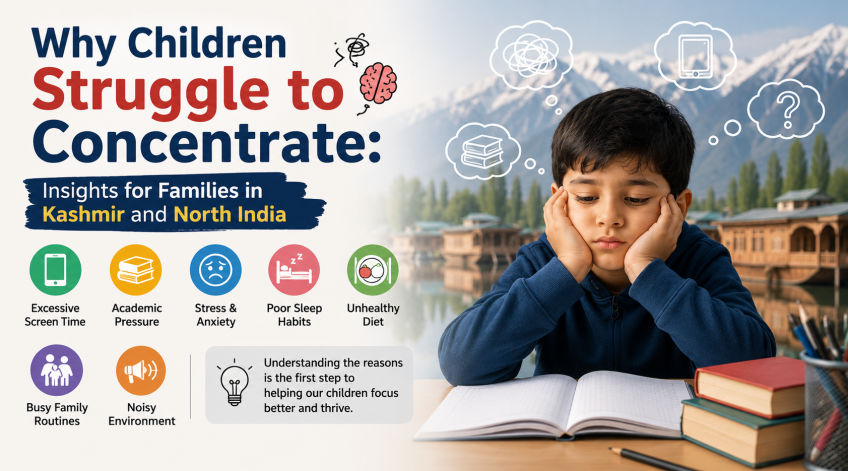
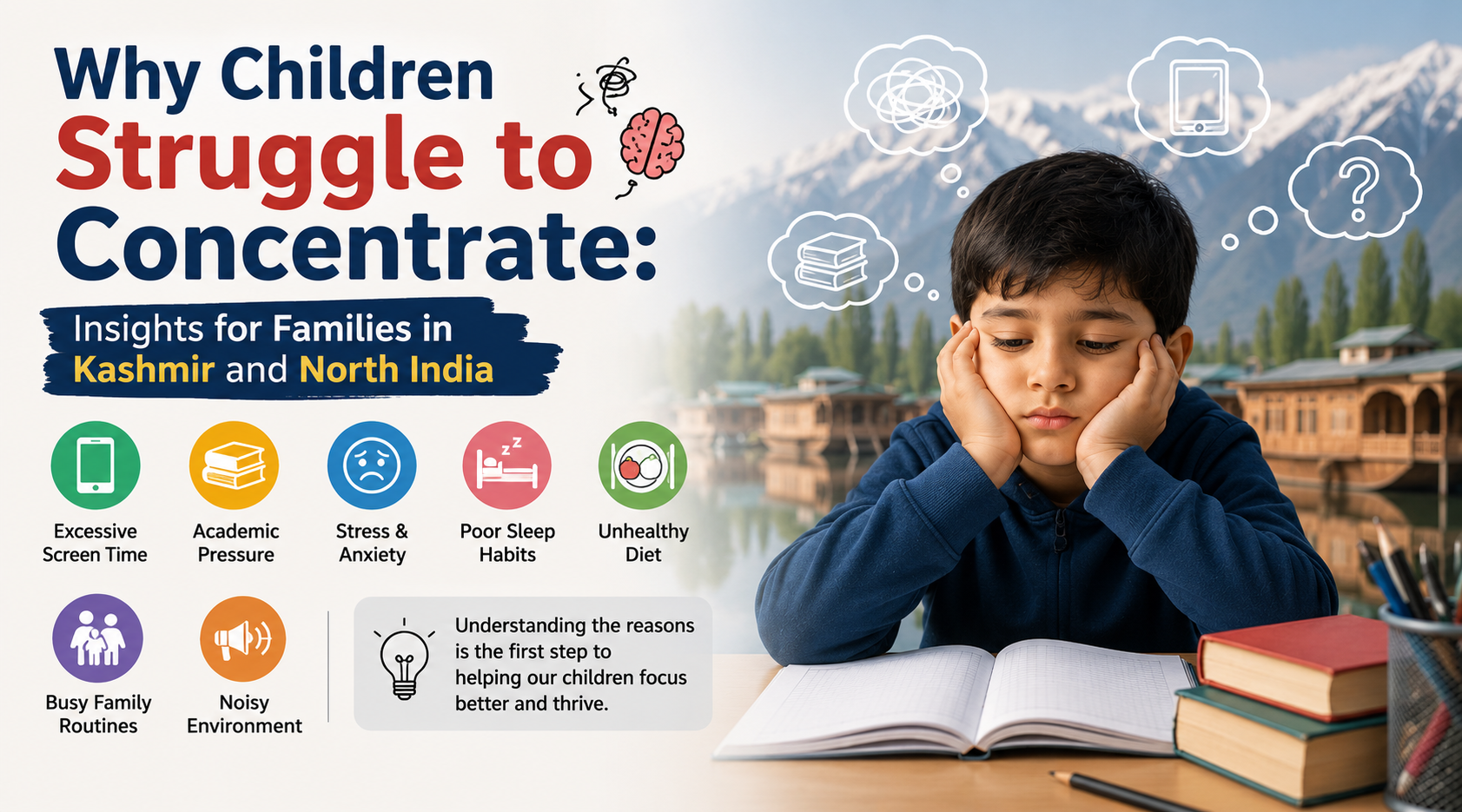
Many parents in Srinagar, Jammu, Delhi, Punjab, and across North India observe their children facing difficulties with attention, restlessness, incomplete homework, or wandering minds during studies. This is a widespread concern backed by research. Studies in India report ADHD prevalence ranging from 1.3% to 28.9%, with pooled estimates around 6-7% and school-based rates often higher (e.g., 6.34% in rural Jammu & Kashmir and up to 11% in some regions).
Understanding the root causes helps parents address them effectively. While some factors are biological, many are influenced by modern lifestyle, environment, and academic demands—particularly relevant to Kashmir’s climate, North India’s competitive schooling, and family routines.
Common Reasons Children Struggle with Concentration
- Neurodevelopmental Factors and ADHD : Attention Deficit Hyperactivity Disorder (ADHD) involves differences in brain development affecting attention, impulse control, and activity levels. It has a strong genetic component (around 75% heritability) and can be influenced by prenatal factors. In India, it is more commonly identified in boys, though girls are often underdiagnosed. Not all attention issues stem from ADHD, but awareness is growing.
- Excessive Screen Time : Prolonged use of smartphones, tablets, and TV fragments attention spans. Constant notifications and fast-paced content overstimulate the brain, making sustained focus on slower tasks like reading or studying harder. In Kashmir’s long winters, indoor screen habits often increase, correlating with poorer academic performance and behavioral challenges.
- Inadequate or Poor-Quality Sleep : Children aged 5-12 need 9-11 hours of quality sleep nightly. Irregular bedtimes, late-night screens, or disturbances reduce cognitive restoration. Sleep deprivation directly impairs attention networks in the brain. Academic pressure and coaching classes in North India often push bedtimes later, worsening this cycle.
- Diet and Blood Sugar Fluctuations : Diets high in refined carbs, sugary snacks, or heavy meals (common in traditional Kashmiri or North Indian households during festivals/winters) cause energy spikes followed by crashes. This leads to brain fog and reduced focus. Nutrient gaps in omega-3s, iron, or proteins can also affect cognitive function.
- Lack of Physical Activity and Outdoor Time : Sedentary routines limit blood flow and neurochemicals like dopamine and BDNF that support focus. Harsh Kashmir winters and urban pollution reduce outdoor play, while packed school + tuition schedules in North India leave little room for movement.High Academic and
- Environmental Stress : Intense competition for board exams, coaching culture, and parental expectations create chronic stress, which narrows attention. In Kashmir, additional factors like seasonal changes, family dynamics, or regional uncertainties can contribute. Air pollution (rising in the Valley due to vehicular emissions, biomass burning, and winter inversion) is linked to cognitive effects and reduced concentration.
- Inconsistent Daily Routines : Unpredictable schedules make it harder for young brains to build attention stamina. Frequent disruptions, overstimulation, or lack of structured breaks compound the issue.
- Other Contributing Factors : Dehydration, sensory overload, underlying health issues, or excessive extracurricular load can also play roles. Environmental pollutants and changing lifestyles further amplify challenges.
These factors often interact—for example, screen time reducing sleep and activity simultaneously.
Moving Forward with Practical Support
Recognizing these causes is the first step. Evidence-based strategies like consistent routines, balanced local nutrition (e.g., incorporating walnuts, greens, and steady-energy foods), limited screens, movement, mindfulness, and quality sleep can make a significant difference for most children.
Families in Srinagar and surrounding areas seeking structured support for brain development, working memory, and holistic growth can explore specialized programs that blend cognitive training with personality development and regionally adapted frameworks.
By understanding why concentration struggles occur and addressing lifestyle factors, parents can help children build stronger attention skills, better academic outcomes, and greater confidence amid today’s demands.